Top Warehouse Automation Trends to Boost Your Efficiency?

Time:2026-05-09 Author:Liam
0%

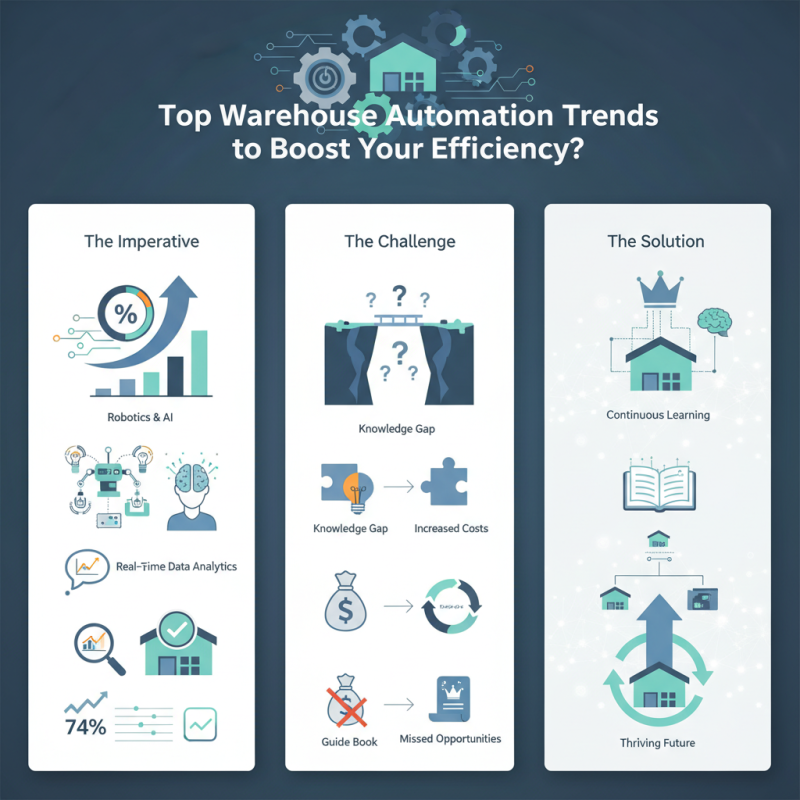
In today's fast-paced logistics environment, optimizing warehouse operations is vital. According to the "Warehouse Automation Trends Guide" by expert Laura Mason, automation is revolutionizing how warehouses function. Mason emphasizes, “Incorporating advanced technology can lead to a 20-30% increase in operational efficiency.” This statistic highlights the urgency for businesses to adapt.

The rise of robotics, artificial intelligence, and real-time data analytics is reshaping warehouse management. A recent industry report indicates that 74% of companies investing in automation have seen significant improvements. However, not all businesses fully understand how to implement these technologies effectively. This gap in knowledge can result in missed opportunities and increased costs.

Navigating these trends requires continuous learning and adaptation. Companies should explore available resources like the "Warehouse Automation Trends Guide" to stay informed. Being aware of these changes can position warehouses to thrive in an increasingly competitive landscape. Embracing automation is not without challenges, but the potential rewards are substantial.
Top Warehouse Automation Trends to Boost Your Efficiency?

Emerging Technologies in Warehouse Automation for Increased Efficiency

In the fast-evolving world of warehouse automation, emerging technologies are reshaping how operations are conducted. Robotics has gained prominence, enabling warehouses to automate picking and packing processes. Mobile robots navigate complex layouts, enhancing productivity. They assist workers by transporting goods, thereby reducing strain and speeding up workflows. However, reliance on robots can create challenges in maintenance and adaptability.

Artificial intelligence (AI) also plays a crucial role in warehouse efficiency. By analyzing vast amounts of data, AI predicts inventory needs more accurately. This leads to better stock management and reduces overstocking or stockouts. Yet, integrating AI requires specialized knowledge, which can be a barrier for some facilities. Organizations must invest time in training their staff to handle these sophisticated systems.

Automated storage and retrieval systems (AS/RS) have emerged as a game-changer, streamlining the storage process. These systems maximize space utilization and minimize human error. However, the initial setup cost can be high, and organizations may struggle to see immediate returns. They must carefully weigh these costs against long-term benefits to determine viability. Embracing all these technologies can certainly elevate efficiency, but it requires thoughtful consideration and strategic planning.

The Role of Robotics in Streamlining Warehouse Operations

Warehouse operations are evolving rapidly, heavily influenced by robotics. Recent studies indicate that up to 70% of warehouse processes can benefit from automation. Robotics excels in tasks like sorting, packing, and transporting goods. This efficiency boost can lead to a 50% increase in throughput.


However, integrating robotics is not without its challenges. Companies often face compatibility issues with existing systems. Additionally, employee training is essential. A survey revealed that 30% of warehouse staff feel unprepared for automation. This gap can lead to operational hiccups and reduced morale.


Despite these hurdles, the long-term benefits of robotics are clear. Facilities that adopt these technologies tend to see a significant reduction in labor costs. A report by the Warehouse Education and Research Council found that automation can cut labor expenses by up to 25%. As businesses navigate this blend of robotics and human labor, a thoughtful approach is critical to success.

Artificial Intelligence and Data Analytics in Inventory Management

Artificial Intelligence (AI) and data analytics are revolutionizing inventory management in warehouses. These technologies help businesses analyze vast amounts of data quickly. They identify patterns and trends that human workers might overlook. For instance, predictive analytics can forecast demand surges. This allows for better stock management and reduces overstocking.

AI-driven tools can automate restocking processes. They ensure that items are ordered just in time, cutting down holding costs. However, implementing these technologies can be challenging. Businesses may struggle with integrating old systems with new tools. Employee training is another hurdle. Staff need to become comfortable with these advanced systems.

Moreover, data quality is essential for accurate insights. Poor data can lead to misguided decisions. Thus, organizations should invest in clean data practices. Regular audits can help maintain data integrity. Embracing AI and analytics is promising, but it requires careful planning and thought. The payoff can be substantial, enhancing efficiency and responsiveness in fast-paced environments.

Benefits of Automated Picking Systems for Order Fulfillment

Automated picking systems are revolutionizing order fulfillment in warehouses. These systems enhance speed and accuracy. With advanced technology, picking errors are reduced significantly. This leads to greater customer satisfaction.

Efficiency is a key benefit of automated systems. They can process numerous orders in less time than manual picking. For instance, a well-implemented system can fulfill multiple orders simultaneously. However, not every warehouse will see immediate improvement. Adapting to automation takes time and training. Some employees may resist these changes, leading to temporary dips in productivity.

Cost savings are another compelling reason for automation. Although initial investments can be high, long-term savings are considerable. Reduced labor costs and lower error rates contribute to this. Yet, it's crucial to evaluate the total cost of ownership. Hidden expenses might negate anticipated benefits. Automation should be approached with a clear strategy. It’s essential to assess the specific needs of your warehouse to ensure successful integration.

Integrating Internet of Things (IoT) for Enhanced Supply Chain Visibility

The integration of the Internet of Things (IoT) has become essential for enhancing supply chain visibility. According to industry reports, 79% of companies with high-performing supply chains use IoT technology. This statistic highlights how IoT can significantly improve operations, making them more transparent and efficient. With real-time data from connected devices, businesses can track inventory levels, monitor equipment status, and predict maintenance needs.

Unlocking the potential of IoT also brings challenges. Data overload can create confusion instead of clarity. A report by Gartner notes that improper data management can lead to missed opportunities and inefficiencies. Companies must ensure that their data strategies include effective filtering and analysis tools. Moreover, staff training is vital; employees need to understand how to leverage IoT data properly.

The demand for real-time insights continues to rise. A survey indicates that 63% of logistics professionals want better supply chain visibility through IoT. Implementing such technology involves upfront costs and requires careful planning. Many organizations are still grappling with these transitions. Each step towards IoT integration should be strategic, as not every process may benefit equally from the technology.

FAQS

: What are the benefits of using robotics in warehouse operations?

: Robotics can improve sorting, packing, and transporting goods. They may increase throughput by 50%.

What challenges come with integrating robotics?

Companies may face compatibility issues. Employee training is also crucial, as many workers feel unprepared.

How does AI enhance warehouse efficiency?

AI helps predict inventory needs by analyzing data. This improves stock management and reduces overstocking.

What are the downsides of implementing AI in warehouses?

Integrating AI needs specialized knowledge and training, which can be barriers for some facilities.

What is an Automated Storage and Retrieval System (AS/RS)?

AS/RS streamlines storage operations, maximizing space and reducing human error. However, setup costs can be high.

What is the role of IoT in supply chain visibility?

IoT provides real-time data on inventory and equipment. This enhances transparency and operational efficiency.

What challenges do companies face with IoT integration?

Data overload can occur, leading to confusion. Effective data management is necessary to avoid inefficiencies.

Why is staff training important in automated environments?

Employees must understand new technologies. Lack of training can lead to operational issues and lower morale.

How should organizations approach the adoption of these technologies?

Careful planning and evaluation of long-term benefits are crucial. Not every process will benefit equally.

What are organizations currently struggling with during transitions to automation?

Many face challenges with implementation and training. They must navigate initial costs versus potential efficiencies.

Conclusion

The evolving landscape of warehouse automation is driven by several key trends aimed at enhancing efficiency and productivity. Emerging technologies play a pivotal role, with robotics streamlining operations and significantly reducing manual labor. Additionally, the integration of artificial intelligence and data analytics in inventory management optimizes stock levels and improves decision-making processes. Automated picking systems are becoming indispensable for order fulfillment, increasing speed and accuracy while minimizing human error.

Moreover, the Internet of Things (IoT) is enhancing supply chain visibility, enabling real-time tracking and monitoring of goods. Together, these elements create a robust framework for warehouses to adapt to the growing demands of the industry. This summary serves as a Warehouse Automation Trends Guide, highlighting the crucial components that organizations should consider to stay competitive in a rapidly changing environment.

Liam

Liam

Liam is a dedicated marketing professional with a profound expertise in the industry, where he excels at highlighting the unique advantages of our core products. With a keen understanding of market trends and consumer needs, Liam frequently updates our company’s professional blog, providing......