Essential Industrial Equipment Maintenance Guide for Buyers?

Time:2026-05-05 Author:Henry
0%

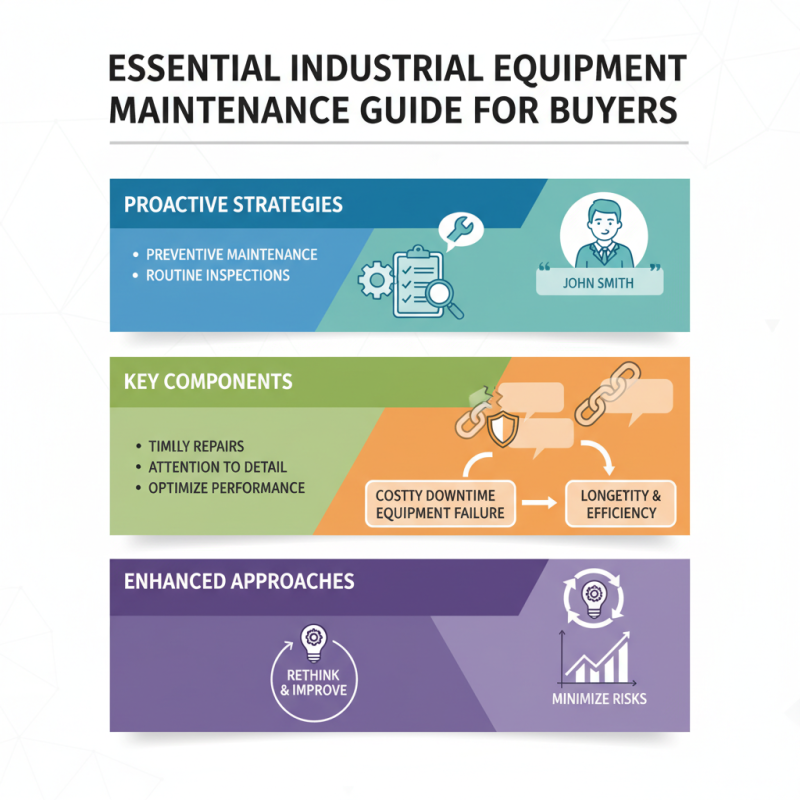
In the fast-paced world of industrial operations, maintaining equipment is crucial. Industrial Equipment Maintenance Guide experts emphasize the significance of proactive strategies. John Smith, a leading authority in the field, once said, “Preventive maintenance is the backbone of operational success.” His insight highlights the need for a well-structured maintenance plan.

An effective Industrial Equipment Maintenance Guide covers several key components. From routine inspections to timely repairs, attention to detail matters. Neglecting these aspects can lead to costly downtime. Businesses often overlook this critical area. They might assume that equipment will run indefinitely. However, regular maintenance ensures longevity and efficiency.

Every company should prioritize its maintenance strategies. Reflecting on past mistakes can foster improvement. Many firms learn the hard way when equipment failure strikes unexpectedly. By adopting best practices outlined in the Industrial Equipment Maintenance Guide, businesses can minimize risks and optimize performance. It’s time to rethink and enhance maintenance approaches.
Essential Industrial Equipment Maintenance Guide for Buyers?

Understanding the Importance of Industrial Equipment Maintenance in Operations

Industrial equipment maintenance is crucial for smooth operations. Neglecting equipment can lead to breakdowns, unexpected costs, and safety hazards. A well-maintained machine operates more efficiently and extends its lifespan. Regular checks can identify minor issues before they escalate.

Investing in maintenance programs pays off significantly. Routine inspections help ensure optimal performance. Neglect can result in severe downtime. Employees must understand the importance of reporting any irregularities. Training staff on basic maintenance can foster a culture of care.

Tips: Develop a maintenance schedule tailored to your equipment. Keep an inventory of spare parts. Encourage team feedback on equipment performance. An engaged team is more likely to notice potential problems. Always remain flexible in your approach to maintenance, adapting as necessary.

Importance of Industrial Equipment Maintenance

Key Components of an Effective Maintenance Strategy for Industrial Equipment

Developing an effective maintenance strategy for industrial equipment is crucial. According to a report by the U.S. Department of Energy, poorly maintained equipment can lead to a 20% increase in energy consumption. Regular inspections and preventive maintenance can mitigate this risk significantly.

One essential component is establishing a routine schedule. Equipment should be checked based on usage hours or specific time intervals. For example, machinery might require maintenance every 500 operating hours. This facilitates early identification of issues. Catching such problems early can save companies up to 40% in repair costs.

Training staff on maintenance best practices is another key factor. Employees should understand equipment specifications and maintenance protocols. The absence of skilled personnel can hinder effective maintenance programs. A survey by the National Association of Manufacturers found that 57% of companies report inadequate training as a primary barrier. This gap can lead to oversight in procedures, causing unexpected equipment failures.

Industry Best Practices for Preventive and Predictive Maintenance Techniques

Preventive and predictive maintenance techniques are critical for industrial equipment longevity. According to the U.S. Department of Energy, regular maintenance can reduce energy consumption by 5-20%. These practices allow companies to identify issues before they become severe.

Many industries rely on predictive analytics. This approach uses data and algorithms to foresee potential failures. A report from McKinsey highlights that predictive maintenance can lower maintenance costs by 20-25%. Real-time monitoring systems often play a crucial role. They provide insights into equipment performance, enabling timely interventions. Yet, deployment can be complex, requiring skilled personnel.

Moreover, implementing a solid maintenance strategy can lead to unexpected challenges. Staff may resist changes, and initial costs may not be justifiable for all organizations. Continuous training and adaptation are essential. The benefits often outweigh the hurdles, fostering a culture of reliability in operations. This balance is vital for sustainable growth in industrial sectors.

Essential Industrial Equipment Maintenance Guide for Buyers

Equipment Type Maintenance Technique Frequency Key Benefits
Conveyor Belts Preventive Maintenance Monthly Reduces downtime, extends lifespan
Hydraulic Systems Predictive Maintenance Quarterly Identifies issues before failure, saves costs
Electrical Motors Preventive Maintenance Biannual Improves efficiency, minimizes repairs
Pumps Predictive Maintenance Biannual Prevents unexpected breakdowns, ensures operation
Compressors Preventive Maintenance Monthly Maintains performance, enhances reliability

Analyzing the Cost-Benefit of Regular Maintenance for Equipment Longevity

Regular maintenance is crucial for industrial equipment. A study by the U.S. Department of Energy found that preventive maintenance could reduce equipment downtime by up to 30%. This directly correlates with increased productivity and cost savings. Equipment that is well-maintained can often last 20% longer than those that are neglected.

Skipping routine maintenance might seem cost-effective initially. However, the long-term costs can accumulate rapidly. For instance, a survey by the Society for Maintenance & Reliability Professionals revealed that businesses could save an average of 12% through planned maintenance versus reactive repairs. Besides, overlooked issues can lead to major failures, resulting in costly repairs and potential safety hazards.

**Tips for effective maintenance:**
- Schedule regular inspections to identify issues early.
- Train staff on proper equipment use to prevent improper wear.
- Keep comprehensive maintenance logs for future reference.

Creating a culture of maintenance is essential. Employees should understand the importance of upkeep. Regular maintenance not only enhances safety but also boosts employee morale. Industrial equipment is an investment; treating it with respect ensures longevity and efficiency.

Emerging Technologies Transforming Industrial Equipment Maintenance Practices

Emerging technologies are reshaping industrial equipment maintenance. Predictive maintenance is gaining traction across sectors. According to a recent report from McKinsey, companies that implement predictive maintenance can reduce equipment downtime by 30 to 50 percent. This approach relies on data analytics and sensor technology to assess equipment health in real time.

In addition, the adoption of IoT (Internet of Things) devices is enhancing maintenance practices. By connecting equipment to the internet, operators can monitor conditions remotely. According to Gartner, this market for IoT in industrial settings is expected to reach $1 trillion by 2025. However, the integration of these technologies presents challenges. Security concerns and data integrity issues often arise. Companies must strike a balance between innovation and risk management.

Furthermore, the rise of augmented reality (AR) provides a fresh perspective on maintenance training. Technicians can use AR glasses to receive real-time guidance while working on complex systems. A study by PwC suggests that AR could improve maintenance efficiency by up to 40%. Companies face hurdles in training staff to utilize these tools effectively. Continuous learning and adaptation are essential in this evolving landscape.

FAQS

: What is the importance of preventive maintenance?

: Preventive maintenance helps reduce energy consumption and extends the life of equipment.

How can predictive maintenance save costs?

Predictive maintenance can lower maintenance costs by 20-25% through early issue identification.

What role do real-time monitoring systems play?

These systems provide insights into performance, enabling timely interventions and avoiding failures.

Why might companies face challenges in implementing maintenance strategies?

Staff resistance and high initial costs can pose significant challenges during implementation.

Is regular maintenance worth the investment?

Yes, regular maintenance can lead to reduced downtime and significant cost savings over time.

How can employees be encouraged to maintain equipment?

Training staff and creating awareness about maintenance benefits can foster a culture of upkeep.

What are some effective maintenance tips?

Schedule inspections regularly, train staff properly, and maintain logs for future reference.

What’s a common misconception about skipping maintenance?

Skipping maintenance may seem cost-effective but often leads to much higher long-term costs.

How does maintenance affect employee morale?

Equipment upkeep improves safety and boosts morale by ensuring a reliable work environment.

What might happen if maintenance issues are overlooked?

Neglected issues can result in major failures, costly repairs, and safety hazards.

Conclusion

The "Industrial Equipment Maintenance Guide" emphasizes the critical role that maintenance plays in ensuring operational efficiency and longevity of industrial equipment. Effective maintenance strategies should encompass both preventive and predictive techniques, allowing organizations to anticipate issues and minimize downtime. By implementing best practices, businesses can optimize their equipment performance while reducing unexpected failures.

Additionally, the guide highlights the importance of a cost-benefit analysis of regular maintenance, reinforcing that such investments lead to greater equipment lifespan and reliability. Furthermore, it addresses the emerging technologies that are revolutionizing maintenance practices, providing new opportunities for efficiency and enhanced productivity. This comprehensive approach ensures that buyers understand the significance of a robust maintenance framework in supporting their operational goals.

Henry

Henry

Henry is a dedicated marketing professional with a profound expertise in the company's offerings. With years of experience in the industry, he possesses an impressive understanding of the market dynamics and consumer behaviors that drive success. Henry is committed to sharing his insights through......