How to Manage Your Warehouse Equipment Lifecycle

Time:2026-09-24 Author:Sienna
0%

Managing warehouse equipment is not simply a purchasing task. It is a continuous operational discipline, from selection and installation to maintenance, renewal, and retirement. This Warehouse Equipment Lifecycle Guide examines how each decision affects safety, productivity, energy use, and long-term costs.

W. Edwards Deming, a leading authority on operational quality, offered a principle that fits equipment lifecycle management: “Without data, you’re just another person with an opinion.” Reliable records should support every major decision. Track forklift hours, battery performance, repair frequency, conveyor downtime, and inspection findings. A worn wheel may seem minor, yet it can slow pallet movement and create uneven traffic around loading bays. Small details matter.

Experienced warehouse teams usually begin with real operating conditions, not attractive specifications. Consider aisle width, floor quality, shift patterns, load weight, charging space, and operator feedback. Then compare the equipment’s total lifecycle cost, rather than its purchase price alone. Preventive maintenance can reduce disruption, but it is not perfect. A scheduled service may still miss unusual vibration, poor braking response, or repeated sensor faults. That is where honest review becomes valuable.

No plan is flawless. A spreadsheet can overlook human behavior. A technician may notice a problem before the software does. This guide therefore combines documented evidence with practical judgment. It explains when to repair, upgrade, relocate, or replace equipment responsibly. The aim is not to keep every machine running forever. The aim is to maintain a safer, more dependable warehouse with decisions that remain defensible months or years later.
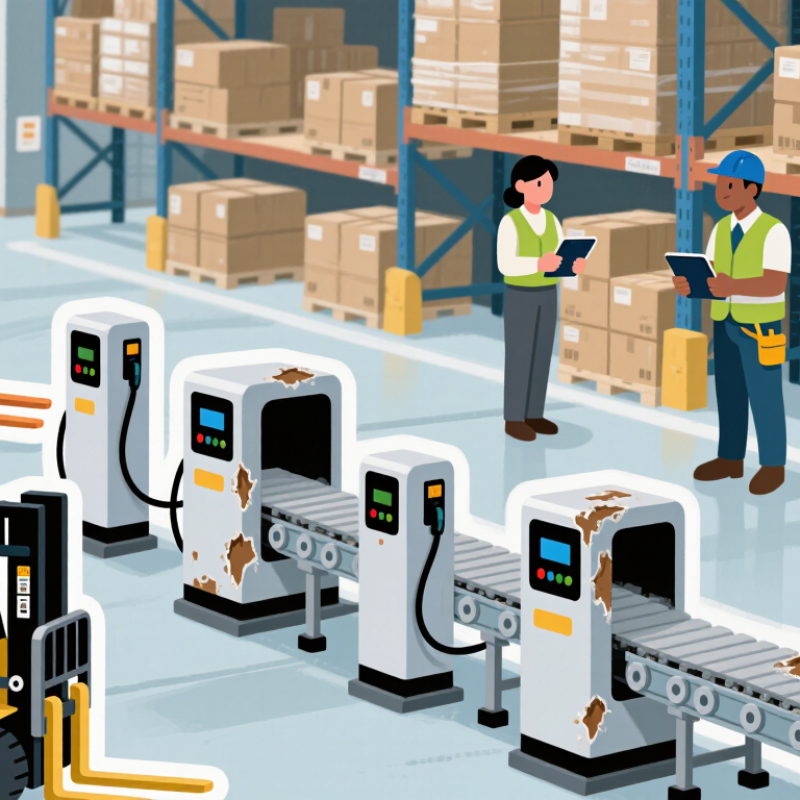
How to Manage Your Warehouse Equipment Lifecycle

Define the Warehouse Equipment Lifecycle and Its Key Stages

The warehouse equipment lifecycle covers every stage from identifying a need to retiring or replacing a machine. It usually includes planning, selection, commissioning, operation, maintenance, and end-of-life decisions. Each stage affects safety, operating costs, and workflow. For example, before adding a pallet truck, assess aisle width, load weights, shift patterns, and operator training needs. A purchase that fits the budget may still slow work if it cannot turn safely in a narrow aisle.

Commissioning establishes a useful baseline. Record the equipment’s condition, service schedule, operating instructions, and any initial performance issues. During daily use, operators can report unusual noise, steering changes, or worn wheels before small faults disrupt a shift. Maintenance records help teams spot recurring problems and estimate repair costs. Still, records are only useful when staff update them; in a busy warehouse, that step can be missed. Review the data regularly and adjust schedules when actual use differs from the original plan.

Tips: Assign an owner to each equipment record. Note purchase date, hours used, inspections, repairs, and downtime. Compare repair costs and reliability over time before deciding whether to keep, refurbish, or replace equipment. Be practical. A machine nearing retirement may remain dependable, while a newer one may need frequent attention. Base decisions on documented condition and workload, not age alone.

Assess Equipment Needs, Performance, and Operational Risks

A warehouse equipment lifecycle starts with the work, not the purchase. Map daily pallet loads, aisle widths, lift heights, travel distances, and peak-hour congestion. Then compare those demands with each machine’s rated capacity and condition. A forklift that handles a typical load may still be unsuitable for an awkward, elevated pallet. Small mismatches matter.

Track operating hours, breakdowns, repair costs, and recurring faults by unit. A handwritten note about a steering fault can be useful, but it is easy to lose. Use consistent inspection records, and compare planned maintenance with actual downtime.

OSHA estimates that forklifts cause about 85 fatalities and 34,900 serious injuries annually in the United States. These figures make equipment condition a safety issue, not merely a budget line. Check brakes, tires, forks, warning devices, and battery or fuel systems before problems disrupt a shift.

Risk assessment should include the people and spaces around the equipment. Review near misses, blind corners, pedestrian routes, and changing storage layouts. A machine may pass inspection yet create risk in a crowded aisle. That distinction is easy to miss. Set clear thresholds for repair, restricted use, or replacement, and revisit them when workloads change. Records are imperfect; operators may overlook a subtle change, and a checklist cannot explain every failure. Pair documented inspections with direct conversations on the warehouse floor.

Plan Equipment Selection, Acquisition, and Implementation

Warehouse equipment decisions should begin with the work, not the catalogue. Map daily pallet moves, aisle widths, peak-hour congestion, and the weight of typical loads. Then compare equipment against those real conditions. A narrow-aisle truck may save space, but only if turning clearance and operator sightlines remain safe. Measure twice. Include maintenance access and battery charging in the layout; both can become bottlenecks later.

Build the selection case around total lifecycle cost: purchase price, energy, service, training, downtime, and expected life. MHI’s 2024 Annual Industry Report found that 55% of supply chain leaders planned to increase technology investment. That signals momentum, not a reason to automate every task. Ask vendors for operating assumptions and service response times, then test them against your own shift patterns. Pilots help. Track picks per hour, charging time, repair calls, and near misses before expanding.

Acquisition also needs a practical implementation plan. Assign an owner for delivery, installation, operator training, and acceptance testing. Confirm floor capacity, charging points, spare parts, and maintenance coverage before equipment arrives. Stage the rollout by zone, keeping older equipment available until new units prove reliable. Real sites are messy. A pilot may reveal that a technically suitable machine slows work around a cramped dock. Record those findings, revise the plan, and preserve contingency funds; teams often underestimate small integration delays.

How to Manage Your Warehouse Equipment Lifecycle — Plan Equipment Selection, Acquisition, and Implementation
Lifecycle Stage Key Planning Dimension Practical Data or Measure Recommended Action Primary Owner Completion Evidence
Assess current operations Throughput and workload Orders, pallets, or lines handled per shift; seasonal peak volume; travel distance Measure representative normal and peak periods before defining equipment requirements. Warehouse operations Documented workload profile and process map
Define requirements Load and operating conditions Maximum load weight, load dimensions, lift height, aisle width, floor condition, and duty cycle Set requirements from actual loads and site conditions; confirm rated capacity is suitable at the required lift height. Operations and engineering Approved equipment specification
Select equipment Task and equipment fit Travel distance, lift frequency, indoor or outdoor use, operator visibility, and maneuverability Compare suitable equipment types against the work; include operator feedback and a site trial where practical. Operations and procurement Evaluation matrix and documented selection rationale
Evaluate safety Hazards and controls Pedestrian crossings, blind corners, speed, visibility, noise, and emergency access Complete a task-based risk assessment and define traffic routes, training, inspections, and protective controls. Health and safety Approved risk assessment and control plan
Plan acquisition Total cost of ownership Purchase or lease cost, energy, maintenance, parts, training, downtime, and expected service life Compare lifecycle costs and service support, not just initial price; verify parts availability and maintenance response. Procurement and finance Cost comparison and approved purchase request
Prepare the site Infrastructure and compatibility Charging or fueling provisions, floor capacity, clearances, network needs, and storage location Check site readiness against equipment specifications and complete required changes before delivery. Facilities and IT Site-readiness checklist signed off
Receive and commission Inspection and acceptance Equipment condition, identification, safety devices, manuals, accessories, and functional checks Inspect against the order, complete commissioning checks, and resolve defects before operational use. Maintenance and operations Acceptance record and commissioning checklist
Implement and train People and process readiness Operator authorization, task-specific instruction, maintenance procedures, and operating routes Train and authorize operators as required; communicate safe-use rules and escalation procedures. Training lead and supervisors Training records and authorization list
Operate and maintain Condition and availability Pre-use inspection results, planned maintenance completion, downtime, and repair trends Use a documented inspection and preventive-maintenance schedule; investigate recurring faults and unsafe conditions. Maintenance and operators Inspection logs and maintenance history
Review and replace Performance and end of life Utilization, repair cost, downtime, safety incidents, capacity changes, and parts support Review performance regularly and plan repair, refurbishment, replacement, or disposal based on condition and operational need. Operations, maintenance, and finance Lifecycle review and documented disposition decision

Maintain, Monitor, and Optimize Equipment Throughout Its Service Life

A warehouse equipment lifecycle begins with a clear record of each asset. Note its location, purchase date, capacity, and expected service conditions. A forklift moving pallets across uneven floors faces different wear than a conveyor running steady shifts. Small details matter. They help teams set realistic inspection intervals and spot unusual changes.

Maintenance works best when it follows both schedules and actual use. Operators can check tires, forks, guards, and warning lights before a shift. Technicians should record repairs, replaced parts, and recurring faults in one accessible log. Look for patterns, not just isolated breakdowns. If one lift repeatedly needs hydraulic repairs, inspect its workload and operating environment. Records are not perfect, and rushed entries can hide useful clues.

Monitoring helps managers decide when to repair, reposition, or replace equipment. Track downtime, repair costs, usage hours, and near misses alongside inspection results. A low-cost sensor may show that a motor runs hotter during peak periods, but readings need human review. Data can be wrong. Compare it with physical checks and operator feedback before acting. As service life advances, review whether an asset still meets capacity needs and safety procedures. Plan replacements early enough to avoid sudden gaps, while recognizing that age alone does not prove a machine is unfit.

Retire, Replace, and Responsibly Dispose of Warehouse Equipment

Retiring warehouse equipment should begin with evidence, not guesswork. Review maintenance logs, inspection notes, repair costs, and parts availability. A forklift with recurring brake faults or a conveyor that stalls during peak shifts may be costing more than its repair bill suggests. Ask operators what they notice during daily use; small changes in noise, vibration, or stopping distance can reveal problems early. Record the decision and its reasoning.

Replacement planning takes time. Measure the work area, aisle width, load sizes, and charging or power access before selecting new equipment. Check that staff can operate it safely and that maintenance support is available. A replacement that fits the budget but slows picking or creates awkward turns is not a real improvement. We have to admit that forecasts can be wrong. Leave room for adjustment.

Disposal deserves the same care as purchasing. Remove equipment from active use, label it clearly, and secure it against accidental operation while its destination is arranged. Separate reusable components, recyclable materials, and items requiring specialist handling. Keep a basic record of the equipment’s condition, transfer, and final destination. Don’t assume a scrap collector will manage every detail. Confirm what happens to batteries, oils, and other materials, and use qualified service providers where needed. The process may feel slow. Rushing it can leave hazards behind.

FAQS

What should a warehouse assess before choosing equipment?

Map pallet loads, aisle widths, lift heights, travel distances, and busy periods. Compare these demands with each machine’s capacity and condition.

Why can a forklift that handles usual loads still be unsuitable?

Awkward or elevated pallets can exceed what routine tasks suggest. Small capacity mismatches matter.

Which equipment details should teams track?

Record operating hours, breakdowns, repair costs, recurring faults, location, purchase date, and capacity. Keep entries in one accessible log.

What should operators check before a shift?

Inspect brakes, tires, forks, guards, warning devices, and battery or fuel systems. A short check can reveal a developing problem.

How can teams identify recurring maintenance problems?

Compare repair records, downtime, and usage hours. Repeated hydraulic repairs, for example, may point to workload or floor conditions.

What risks should a warehouse review beyond the machine itself?

Check near misses, blind corners, pedestrian routes, and changing storage layouts. A machine may pass inspection but still create risk in a crowded aisle.

How should sensor readings guide equipment decisions?

Treat readings as clues, not proof. Compare them with physical checks and operator feedback because data can be wrong.

When should equipment be repaired, restricted, or replaced?

Set clear thresholds and revisit them when workloads change. Consider capacity, safety, downtime, and repair costs; age alone does not prove a machine is unfit.

Why plan replacements before equipment fails?

Early planning helps avoid sudden gaps in warehouse operations. Still, records and checklists can miss subtle changes, so speak with operators on the floor.

Conclusion

This Warehouse Equipment Lifecycle Guide explains how to manage equipment from the first assessment of operational needs through its eventual retirement. It begins by defining the lifecycle’s key stages and shows how to evaluate equipment capacity, condition, performance, and potential risks in the context of daily warehouse operations. These assessments help teams identify current requirements, anticipate future demands, and make informed decisions.

The guide also covers planning equipment selection, acquisition, and implementation, including how to prepare staff and workflows for new assets. During service life, routine maintenance, performance monitoring, and periodic reviews can help improve reliability, safety, and efficiency. When equipment no longer meets operational needs or becomes uneconomical to maintain, a planned retirement and replacement process can reduce disruption. Responsible disposal completes the lifecycle and supports better resource management.

Sienna

Sienna

Sienna is a skilled marketing professional with a deep expertise in our company’s core products and services. With a passion for innovation and detail, she plays a pivotal role in crafting insightful blog posts that not only highlight the unique features of our offerings but also provide valuable......