Logistics performance is rarely lost in one dramatic failure. It usually slips through small gaps: an unscanned pallet, a late carrier update, or a warehouse aisle holding the wrong stock. The Council of Supply Chain Management Professionals reported that U.S. business logistics costs reached $2.3 trillion in 2023, equal to 8.7% of national GDP. That scale makes process discipline commercially important, not merely operational.
The seven Logistics Process Improvement Methods in this guide connect practical control with measurable results. They include process mapping, warehouse slotting, inventory accuracy programs, route optimization, automation, supplier collaboration, and continuous performance review. The World Bank’s 2023 Logistics Performance Index evaluates customs, infrastructure, shipment arrangements, service quality, tracking, and timeliness. These dimensions show why improvement cannot stop at the loading dock. A faster warehouse may still disappoint customers when tracking data arrives late.
Maritime transport carries over 80% of global trade by volume, according to UNCTAD’s Review of Maritime Transport 2023. One delay can therefore affect several handoffs, systems, and partners. Good methods expose those connections. They also require humility. A dashboard may look impressive while workers still print labels manually. A routing algorithm may save distance but create difficult delivery windows. The right approach tests changes in real operations, measures service and cost together, and listens to the people moving goods every day. Small corrections matter. Consistency matters more.
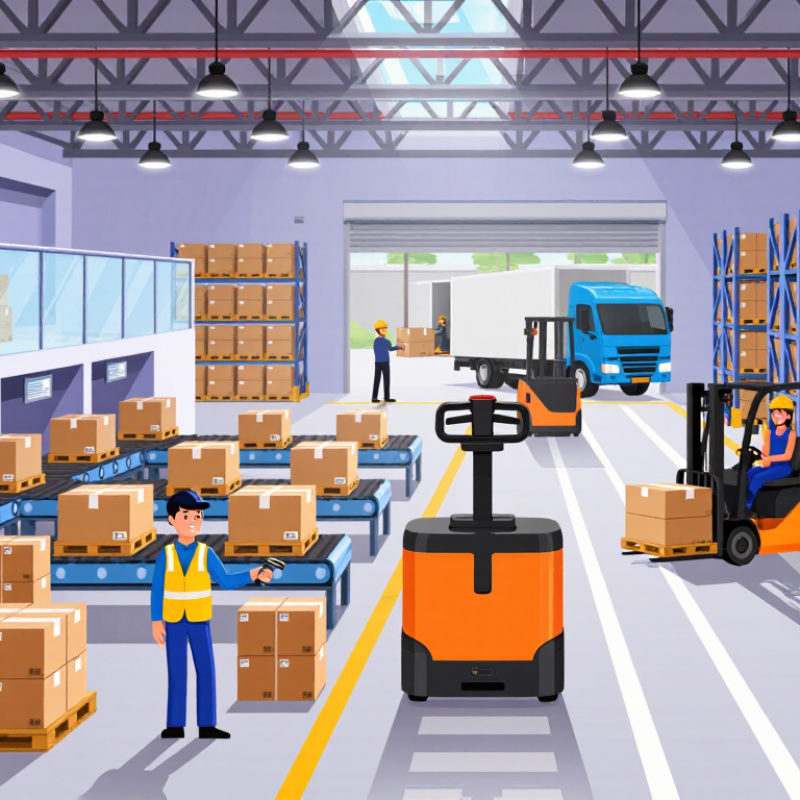
Map Logistics Workflows and Identify Operational Bottlenecks
7 Best Logistics Process Improvement Methods
Map Logistics Workflows and Identify Operational Bottlenecks
A reliable improvement project starts with a real workflow map. Follow one shipment from order release to final dispatch. Record each handoff, scan, queue, and approval. Use direct observation, not assumptions. Our first map is rarely accurate. Staff often reveal hidden work, such as repeated data entry or searching for missing labels. Mark delays with timestamps and note where decisions change.
Seven practical methods can expose these weaknesses: process mapping, time studies, value-stream analysis, bottleneck measurement, standard work, cross-functional reviews, and controlled pilots. Compare planned cycle times with actual performance. A packing station may process orders quickly, while items wait forty minutes for verification. That queue is the constraint. Measure waiting time, rework, travel distance, error frequency, and workload variation. Simple evidence is powerful.
Speak with warehouse operators, planners, drivers, and customer service teams. Each group sees a different part of the process. Ask what interrupts normal work. Then test one small change, such as rearranging fast-moving items or removing a duplicate approval. Track results for several operating days. A pilot can fail. That failure still identifies a weak assumption. Review the map again after implementation, because workarounds often appear when pressure increases. Keep ownership clear, use current data, and document every process change.
Standardize Procedures and Apply Lean Logistics Principles
7 Best Logistics Process Improvement Methods
Standardize procedures before chasing automation.
A clear standard operating procedure should show each handoff, scan point, safety check, and exception path. In a receiving area, workers need visible instructions for checking cartons, recording damage, and assigning locations. Keep each step measurable. Useful indicators include dock-to-stock time, picking accuracy, inventory variance, and on-time dispatch.
Lean logistics strengthens these standards by removing waiting, excess movement, rework, and unnecessary handling. Use value-stream mapping to expose delays, then apply 5S, visual controls, batch-size reviews, and root-cause analysis. Daily improvement meetings should examine one problem at a time. The 2024 State of Logistics Report estimated United States business logistics costs at 2.3 trillion dollars in 2023, or 8.7% of gross domestic product. Small process losses therefore deserve serious attention. A two-minute delay across hundreds of daily orders becomes expensive.
Technology can support disciplined work, but it cannot repair unclear procedures. The 2024 MHI Annual Industry Report found that 55% of supply-chain professionals expected to adopt inventory and network optimization technologies within five years. Start with a controlled pilot. Compare results before and after the change. One imperfect lesson matters: our first checklist contained too many fields, so staff skipped several of them. Shorter instructions improved completion, but supervisors still needed weekly audits. Standardization must evolve when real workers reveal friction.
Optimize Inventory, Warehouse Layout, and Order Fulfillment
7 Best Logistics Process Improvement Methods
Optimize Inventory, Warehouse Layout, and Order Fulfillment
Accurate inventory starts with disciplined counting. Use ABC classification to focus checks on high-value or fast-moving items. Set reorder points from demand history, supplier lead times, and safety stock needs. Cycle counts expose small errors before they become urgent shortages. They also reveal a useful warning: records can look precise while shelves remain wrong.
Warehouse layout should support movement, not tradition. Map the path from receiving to storage, picking, packing, and dispatch. Place popular items near packing stations, but review this choice monthly. Seasonal demand can quickly make a convenient location inefficient. Use clear bin labels, consistent aisle codes, and small visual markers. Test one layout change at a time. Otherwise, you may improve one route while creating congestion elsewhere.
Order fulfillment improves when each handoff is measurable. Group compatible orders into batches, or use zone picking for larger facilities. Scan items during picking and again before packing. Track pick accuracy, order cycle time, and packed orders per labor hour. These figures should guide coaching, not punish workers. A simple exception log can identify repeated causes, such as damaged cartons or unclear instructions. Perfection is unlikely. Review failed orders weekly, then adjust the process, training, or storage rule that allowed them.
Improve Transportation Planning, Routing, and Carrier Coordination
7 Best Logistics Process Improvement Methods
Improve Transportation Planning, Routing, and Carrier Coordination
Transportation planning improves when decisions use clean, recent data instead of familiar habits. Forecast demand by lane, customer, weight, and delivery window. Consolidate compatible loads to reduce empty miles and rushed dispatches. Build a daily capacity plan with backup equipment and realistic loading times. Keep it visible to planners and warehouse supervisors. Short meetings expose conflicts before trucks arrive.
Routing tools can compare distance, stop density, traffic, and promised delivery times. Planners should still test each suggested route against local congestion and driver experience. Create standard routing rules, then review exceptions manually. Use time-window records and arrival scans to measure actual performance. A route may look efficient but cause detention at a crowded dock. That weakness is easy to miss.
Carrier coordination needs clear tender deadlines, appointment details, and escalation contacts. Use a shared calendar for pickup changes and dock availability. Track acceptance rates, pickup punctuality, delivery reliability, and communication quality. Review these measures weekly, not only after a failure. Seven methods sound orderly, but operations rarely stay orderly. Forecasts miss sudden demand. Drivers meet unexpected road closures. Carrier scorecards can also punish partners for delays caused by warehouse congestion. Reviewing the root cause prevents unfair decisions and improves the next plan.
This chart compares typical midpoint estimates for transportation-cost reduction associated with seven widely used logistics process improvement methods. Actual results vary by network complexity, shipment volume, data quality, and implementation maturity.
Use Technology, Performance Metrics, and Continuous Process Improvement
7 Best Logistics Process Improvement Methods
Effective logistics improvement starts with visible work. Map each handoff, standardize receiving, simplify warehouse layouts, and remove repeated data entry. Use barcode scanning, shipment tracking, and shared dashboards to expose delays before customers report them. Technology matters, but a scanner can record a bad process faster.
Performance metrics should connect daily actions with service results. Track order cycle time, picking accuracy, inventory turnover, damage rates, and delivery reliability. Set targets by product category and route, not with one universal number. The World Bank’s 2023 Logistics Performance Index found that shipments can spend about 44 days moving between exporter and importer. Nearly 60% of that time involves waiting and uncertainty. Small delays deserve measurement.
Continuous improvement needs short experiments, weekly reviews, and honest feedback from drivers and warehouse staff. Test one layout change, compare the data, then adjust the standard procedure. The 2024 State of Logistics Report estimated logistics costs at 12.7% of United States economic output in 2023, showing how expensive friction can become. Our first dashboard may be wrong. That is useful. Recheck its definitions, sample size, and missing exceptions. Improve inventory placement, supplier communication, labor planning, and return handling through repeated PDCA cycles. Five minutes saved per order can become thousands of hours annually.
FAQS
Clear procedures show every handoff, scan point, safety check, and exception path.
Workers should inspect cartons, record damage, scan items, and assign storage locations.
Track dock-to-stock time, picking accuracy, inventory variance, damage rates, and dispatch reliability.
Map the value stream to find waiting, excess movement, rework, and unnecessary handling.
Start with a controlled pilot using scanning, tracking, or shared dashboards.
Define each metric, sample size, time period, and exception category.
Run short experiments, review results weekly, and collect feedback from drivers and warehouse staff.
A two-minute delay across hundreds of daily orders can create major labor costs.
Conclusion
Effective Logistics Process Improvement Methods begin with a clear understanding of how work moves through the organization. By mapping logistics workflows, teams can identify delays, duplicated tasks, communication gaps, and other operational bottlenecks. Standardizing procedures and applying lean logistics principles then helps reduce waste, improve consistency, and create more reliable daily operations. Reviewing inventory practices, warehouse layouts, and order fulfillment processes can further increase accuracy, storage efficiency, and customer satisfaction.
Transportation planning is another essential area for improvement. Better route planning, shipment scheduling, and carrier coordination can reduce delays and control operating costs. Technology, supported by useful performance metrics, provides the visibility needed to monitor results and make informed decisions. By tracking indicators such as delivery reliability, order accuracy, inventory turnover, and processing time, organizations can identify new opportunities for improvement. Continuous review, testing, and adjustment ensure that logistics processes remain efficient, flexible, and aligned with changing business needs.

 CTRA Logistics